How do you build a metro line beneath a historic city without endangering its heritage?
In the early 2000s, the construction of the Amsterdam metro presented an ambitious and complex challenge. Working beneath the streets and canals of the Dutch capital, the teams had to contend with a particularly sensitive environment comprising soft, water-saturated clay soil, historic neighbourhoods built on century-old wooden piles, and close scrutiny from the authorities and general public alike.
In this context, even the slightest ground deformation could have significant consequences for existing buildings and infrastructure. Monitoring ground movements therefore became a key priority for ensuring the safety of the construction site.
An extraordinary challenge
The client’s request was clear: to set up a monitoring system capable of observing ground behaviour over a full year to account for seasonal variations and detect even the slightest anomaly in real time throughout the works.
The objective was twofold:
- to ensure the stability of the city during construction;
- to protect the wooden piles supporting numerous historic buildings, as exposure to the air could accelerate their deterioration.
To meet these requirements, Sixense designed a fully bespoke monitoring solution with the highest possible standards of accuracy and reliability.
A world first in monitoring
At the time, this project was one of the most ambitious urban infrastructure monitoring programmes ever undertaken. No monitoring system had ever been deployed on such a scale to support the construction of a metro system in a historic urban setting.
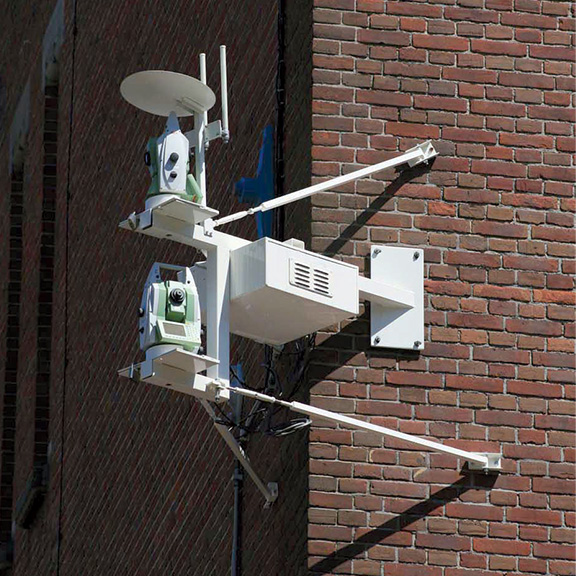
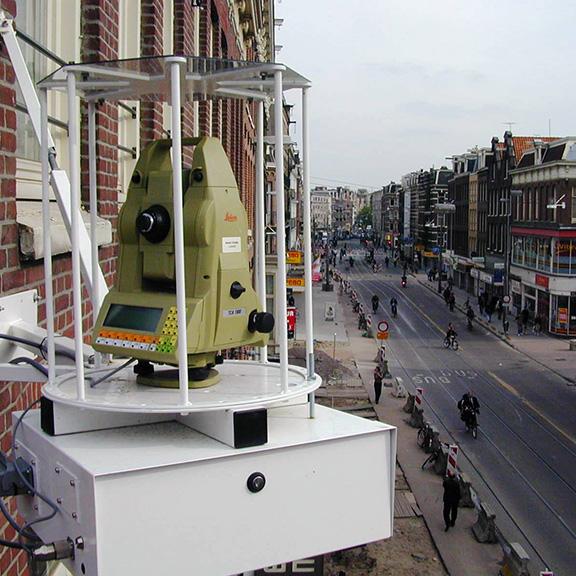
The implemented system comprised:
- 75 automated theodolites
- Nearly 8,000 measurement targets
- 180 instrumented boreholes fitted with automatic sensors
- 4,5 km of underground route monitored continuously
- A complex network of cabling and instrumentation enabling real-time monitoring of ground and structure movements